
Xeptagon designs, develops and maintains climate, environmental-market and governance systems for governments, United Nations agencies, multilateral programmes and regulated institutions. Explore how we translate complex policy, data and market requirements into secure digital infrastructure that institutions can operate with confidence.
Our work ranges from reusable open-source platforms for global deployment to systems configured around the legal, institutional and operational requirements of individual countries.
Every engagement combines policy understanding, workflow design, data architecture, software engineering, integration, deployment and long-term support. This allows Xeptagon to deliver locally relevant systems while maintaining the quality, security and interoperability expected of globally trusted infrastructure.
Designed, developed and maintained by Xeptagon for the United Nations Development Programme, providing countries with reusable infrastructure for carbon-credit management and Article 6-ready market operations.
A globally reusable platform developed by Xeptagon to support national climate-data governance, greenhouse-gas inventories, Nationally Determined Contribution tracking and Biennial Transparency Report preparation.
A multi-country platform developed by Xeptagon to manage beneficiary enrolment, contracts, environmental monitoring, verification and performance-based payments across Central Africa.
National carbon-market infrastructure currently being developed by Xeptagon to strengthen credit tracking, Article 6 processes, climate transparency and international registry interoperability.

Blockchain and analytics infrastructure developed by Xeptagon to strengthen environmental-asset traceability and provide transparent ecosystem-level visibility across Hedera Guardian.

National infrastructure developed by Xeptagon to support Sri Lanka's digital transformation of climate finance, carbon-market administration and future Article 6 participation.
A government data platform developed by Xeptagon to digitise price collection, validation, aggregation and analysis for economic monitoring and official statistical reporting.
A comprehensive look at our global deployments, challenges faced, and the systems delivered.
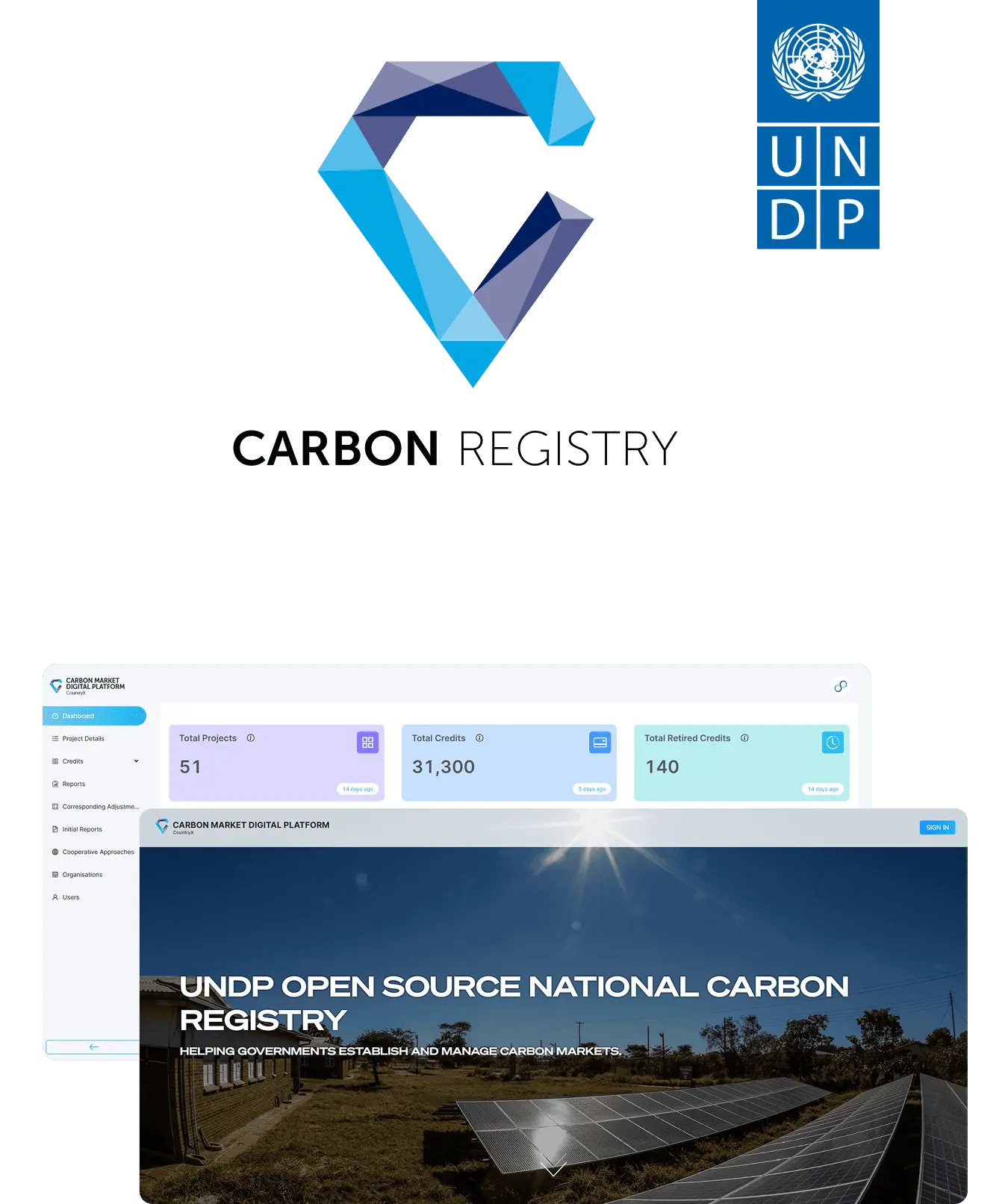
Countries need secure infrastructure to register mitigation activities, issue and track carbon credits, manage ownership, prevent double counting and prepare for participation in international markets. Developing an independent registry from the beginning can require significant time, specialised expertise and long-term maintenance resources.
Client: United Nations Development Programme
The United Nations Development Programme required an open-source registry that countries could adopt and configure around their own institutions, climate policies and carbon-market procedures. The platform needed to support national ownership, reduce implementation barriers and connect with wider climate-market infrastructure.
Xeptagon designed and developed the registry’s core architecture, stakeholder portals, governance workflows, credit-lifecycle functionality, reporting modules and integration interfaces. We continue to maintain and enhance the platform while supporting country-level configurations and deployments.
The registry is designed to connect with national Measurement, Reporting and Verification systems, Climate Action Data Trust, international cooperation platforms and other climate-market infrastructure. It can also use Hedera Guardian as an optional layer for methodology digitisation, environmental-asset tokenization and blockchain-backed traceability.
The registry has been accredited as a Digital Public Good. Initial deployment was completed in Namibia, with Xeptagon also supporting adaptations and national registry work in countries including Sri Lanka, Zimbabwe and Vietnam. (Xeptagon)
The platform gives countries a reusable and adaptable foundation for national carbon-market operations. It reduces the need to build separate systems from the beginning while preserving each country’s authority over governance, data and market participation.
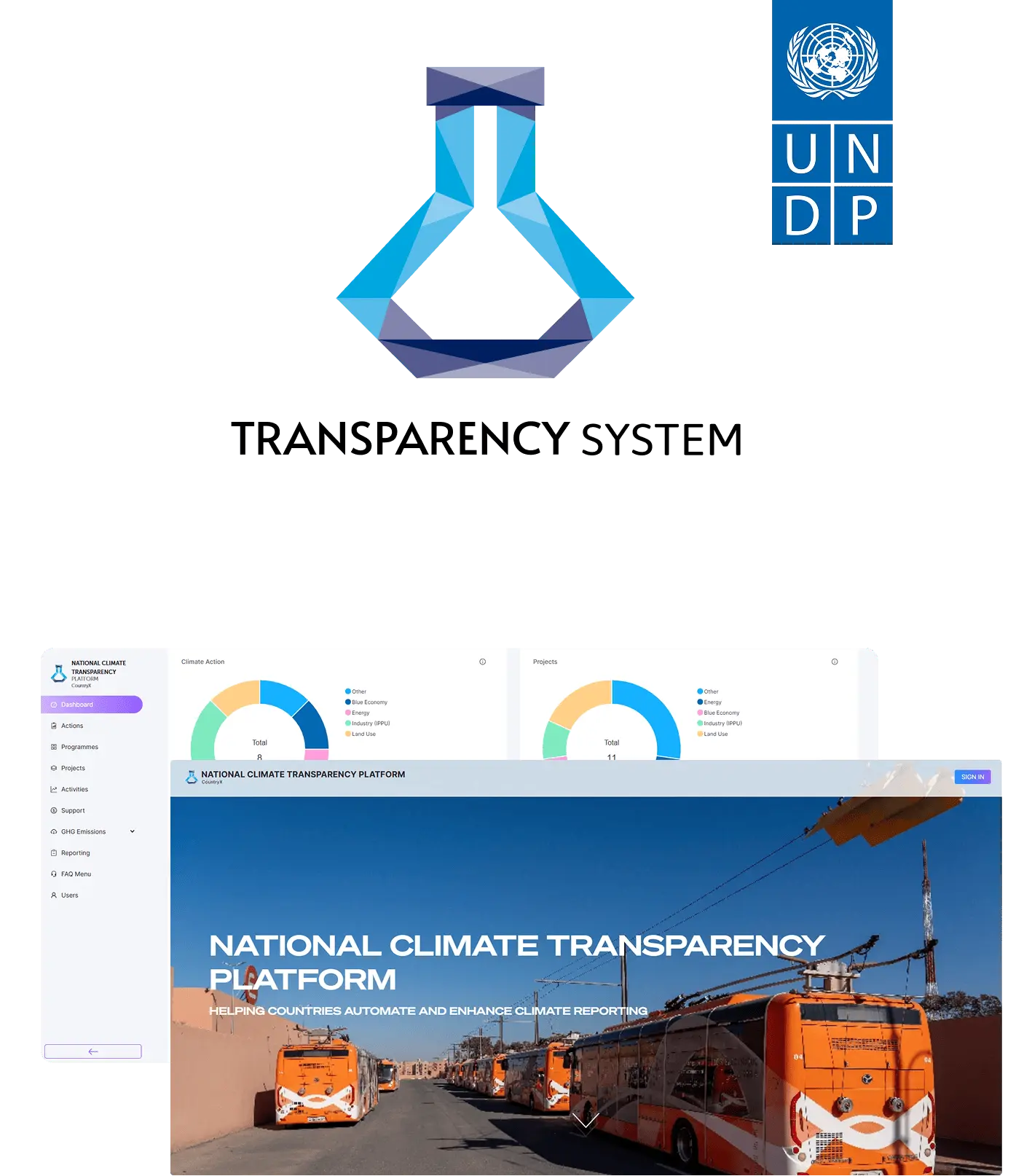
National climate information is often distributed across ministries, agencies, sector databases and spreadsheets. This fragmentation makes it difficult to maintain consistent greenhouse-gas inventories, monitor climate commitments and prepare transparent reports under the Paris Agreement.
Client: United Nations Development Programme
UNDP required a reusable digital platform to help countries implement Article 13 of the Paris Agreement and the Enhanced Transparency Framework. The platform needed to support country-specific institutions while providing a structured foundation for Measurement, Reporting and Verification and Biennial Transparency Report preparation.
Xeptagon designed and developed the core Digital Transparency System, including its architecture, data modules, institutional workflows, user permissions, dashboards, reporting tools and integration services. We also support localisation, deployment, training and continued platform maintenance.
The system can consolidate information from sector ministries, statistical systems, national MRV platforms, carbon registries and other government data sources. Its modular architecture supports country-specific sectors, roles, languages and reporting responsibilities.
The core platform has been delivered. Seychelles launched its NDC Transparency System as a central platform for climate-related information, followed by stakeholder training and national adoption activities. The platform is also supporting Seychelles’ updated NDC monitoring and reporting processes. (UNDP)
The system creates a common national climate-data backbone. It improves coordination across institutions, strengthens data consistency and provides countries with a more efficient and accountable approach to Article 13 reporting.
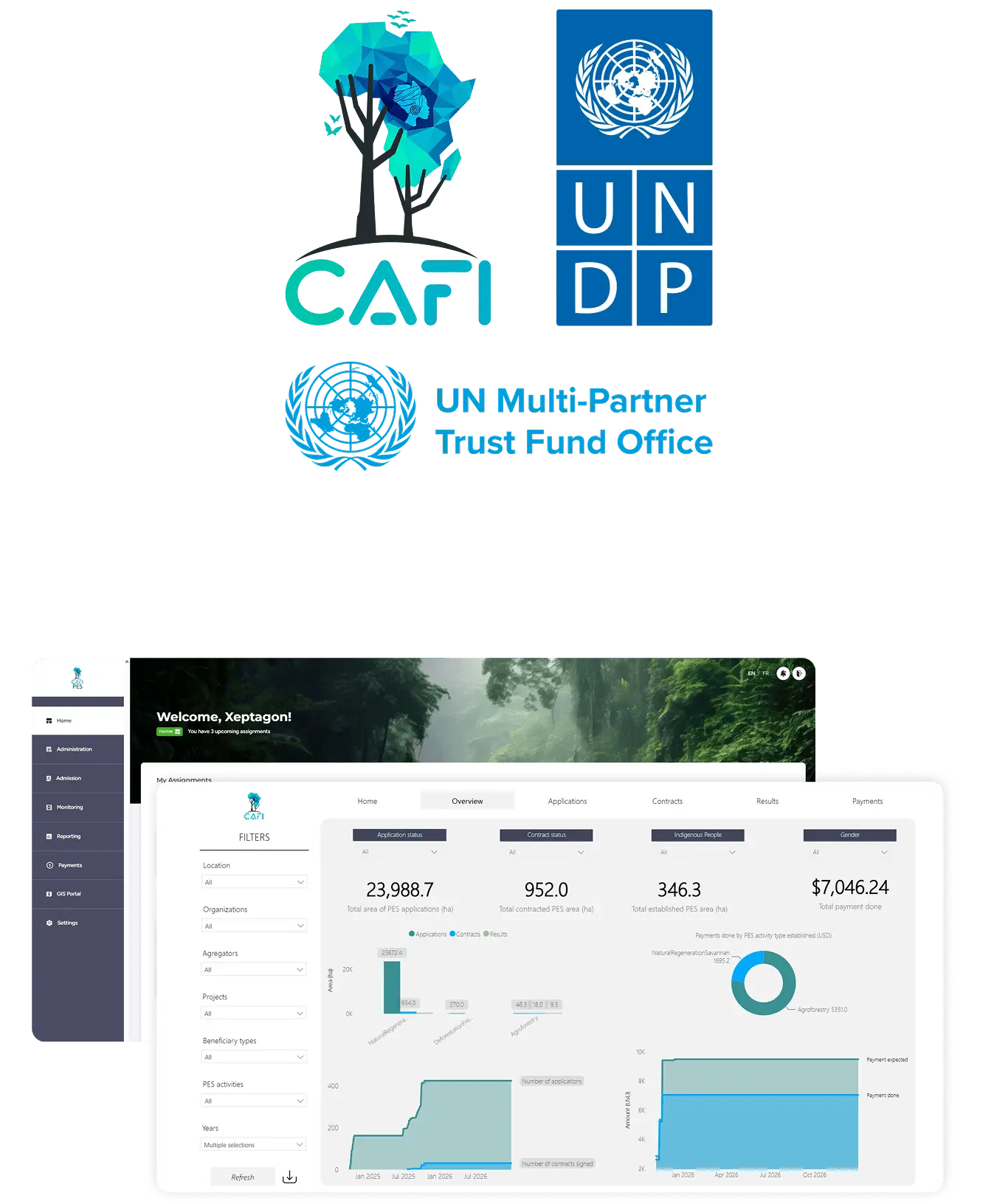
Payment for Environmental Services programmes require a reliable way to enrol beneficiaries, establish contracts, monitor activities, verify environmental outcomes and calculate payments. When these processes operate across several countries, fragmented tools can make oversight and consistent programme administration difficult.
Client: Central African Forest Initiative, under the United Nations Development Programme
The Central African Forest Initiative supports performance-based environmental finance across the Congo Basin. Farmers, cooperatives and communities receive incentives when agreed sustainable land-use and forest-protection outcomes are achieved and verified.
Xeptagon designed, developed, hosts and maintains the CAFI PES Platform. Our work covers workflow design, beneficiary and programme administration, application development, field-data integration, geospatial functionality, cloud infrastructure and ongoing support.
The platform connects with field-data collection tools, geotagged evidence and geospatial information. It supports programme workflows covering enrolment, contracting, monitoring, verification and payment administration.
The system is live and supports CAFI’s evolving multi-country PES programme. CAFI describes its PES Management Tool as overseeing the complete lifecycle from enrolment and contracts through field monitoring, verification, reporting and payments. (Central African Forest Initiative (CAFI))
The platform provides a common digital environment for large-scale results-based environmental finance. It improves programme consistency, traceability and visibility while helping climate finance reach local beneficiaries through verified environmental performance.
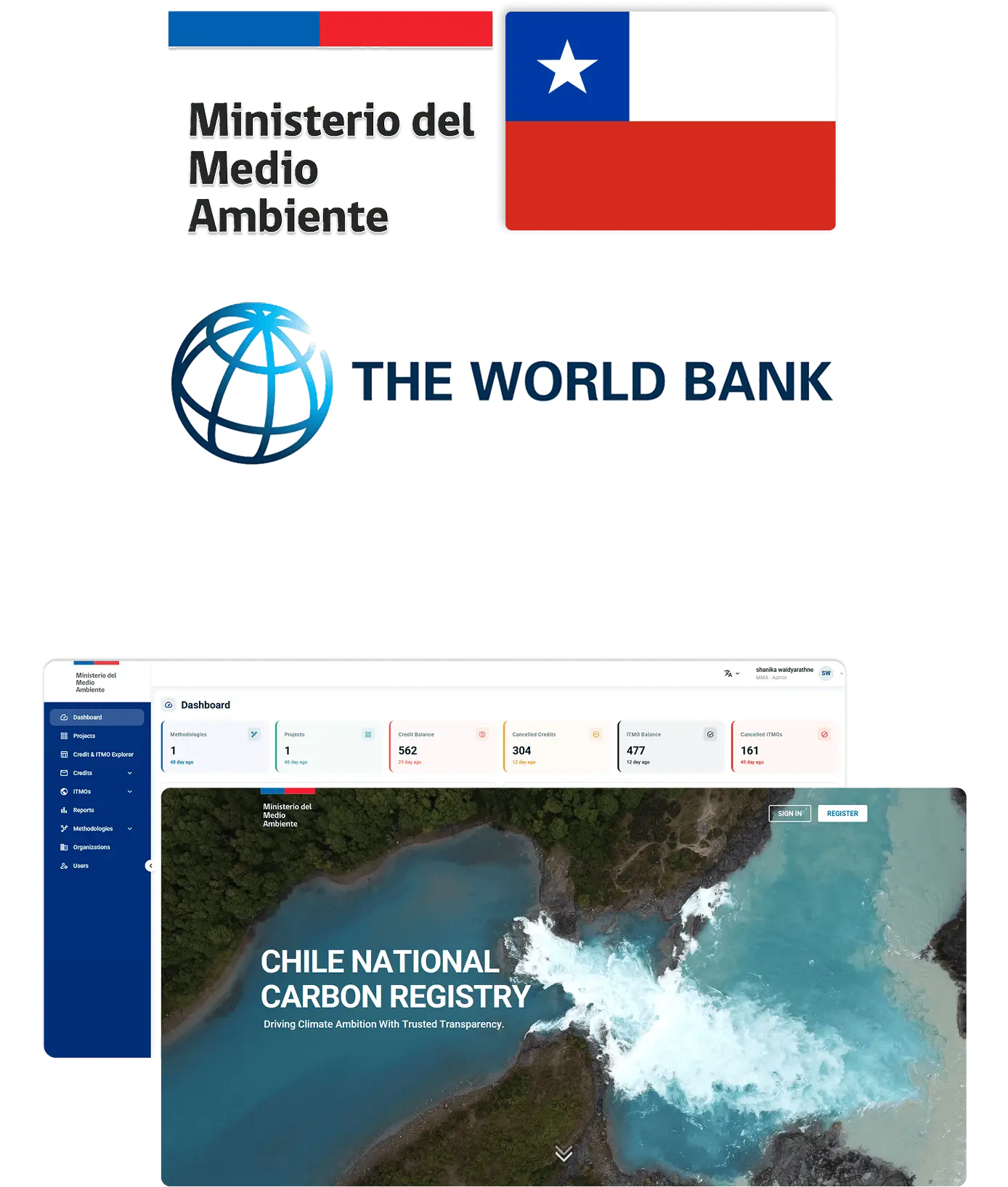
Chile requires national digital infrastructure that can translate its climate legislation, carbon-market policies and Article 6 responsibilities into transparent operational workflows. The registry must support different stakeholders while maintaining clear control over mitigation activities, environmental units and international transfers.
Client: Government of Chile
Chile is strengthening its climate-market and carbon-pricing infrastructure while preparing for deeper participation in international carbon markets. The country requires a registry capable of supporting national policy, high-integrity credit tracking and international interoperability.
Xeptagon has been contracted to develop Chile’s National Carbon Registry. Our role includes institutional and workflow analysis, system design, platform development, registry configuration, integration planning, testing, training and support for national implementation.
The architecture is designed for connectivity with national MRV and transparency systems, Climate Action Data Trust-aligned data structures, external registries, authorised exchanges and international Article 6 reporting processes.
The project is under implementation. Xeptagon is working with Chilean counterparts to translate the country’s policy, institutional and reporting requirements into a configurable national registry. (Xeptagon)
The registry will provide Chile with a national source of truth for carbon-market activities and environmental units. It will strengthen oversight, improve transparency and provide the digital foundation needed for domestic market development and international cooperation.
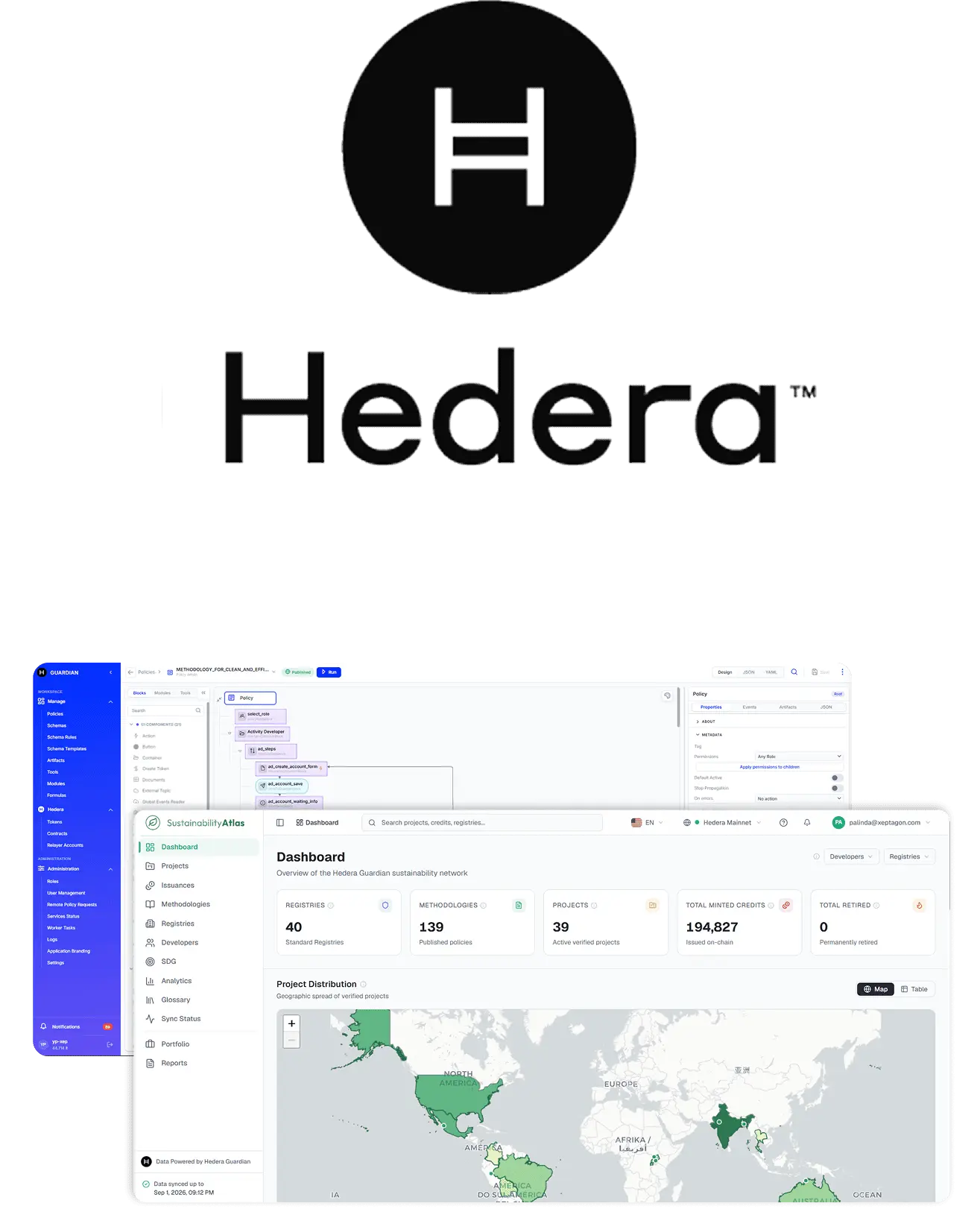
Environmental markets require both detailed asset-level traceability and wider visibility across registries, methodologies and projects. Blockchain can add verifiable records, but it must remain connected to institutional workflows, methodologies and authoritative registry data.
Client: The Hedera Foundation and the wider Hedera sustainability ecosystem
Hedera Guardian provides an open-source framework for digitising environmental methodologies and creating verifiable digital environmental assets. The ecosystem also requires transparent analytics to understand activity across registries, methodologies, projects and issued units.
Xeptagon integrated Hedera Guardian with the UNDP Digital Public Good National Carbon Registry. We also developed the Sustainability Atlas, a public analytics platform that provides ecosystem-level visibility across the Hedera Guardian sustainability network.
The solution connects the National Carbon Registry, Hedera Guardian policy workflows and the Hedera network. The Sustainability Atlas processes publicly available Guardian ecosystem information and presents it through interactive dashboards, maps and trend views.
The registry integration is available as an optional extension for governments and programme operators. The Sustainability Atlas is live and displays data synchronised from the Hedera mainnet. (Xeptagon)
Together, the projects demonstrate how blockchain-backed evidence and public analytics can strengthen environmental-market transparency without replacing the authority of registries, regulators or programme owners.
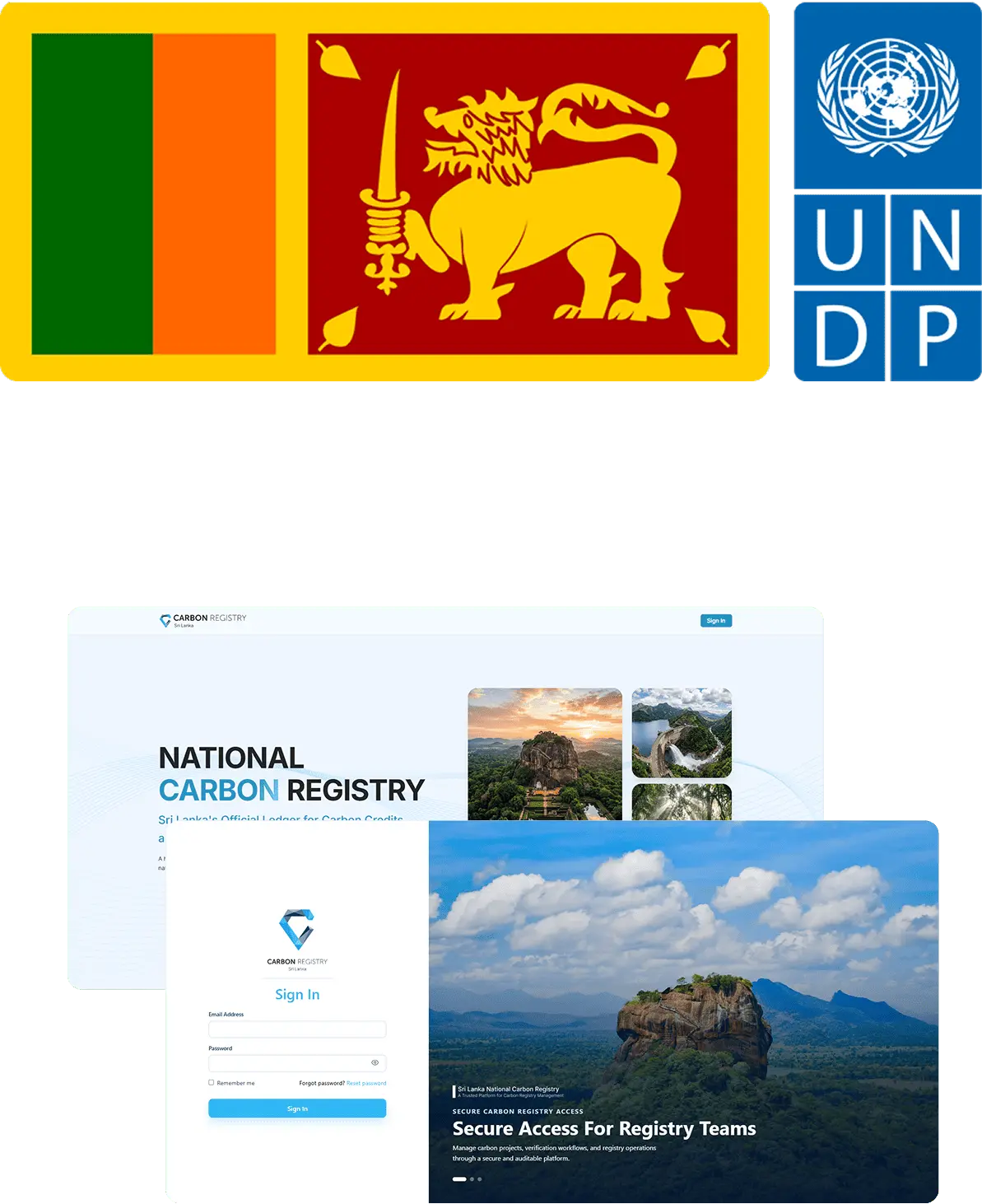
Sri Lanka requires nationally owned digital infrastructure to connect climate policy, project administration, carbon-credit management and future international market participation. The system must remain adaptable while the country’s institutional procedures and approval structures continue to develop.
Client: Ministry of Environment, with funding and guidance from the United Nations Development Programme
The project supports the digital transformation of Sri Lanka’s climate-finance and carbon-market ecosystem. It is overseen by the Ministry of Environment, with UNDP funding and guidance and technical engagement involving the UNFCCC regional office.
Xeptagon configured and enhanced the UNDP National Carbon Registry architecture for the Sri Lankan context. Our role includes workflow analysis, registry development, local configuration, Article 6 process design, testing, stakeholder consultation, training and implementation support.
The registry is designed to connect with Sri Lanka’s wider climate-finance, MRV and transparency infrastructure. Its architecture also supports future interoperability with international systems, registries and environmental markets.
Core registry development has been completed, while workflows and institutional responsibilities can continue to be configured as Sri Lanka’s carbon-market framework matures. The original project was initiated under UNDP guidance and Ministry of Environment oversight using the UNDP National Carbon Registry codebase. (Xeptagon)
The platform gives Sri Lanka a nationally controlled digital foundation for managing climate projects and carbon-market activity. Its configurable architecture allows the system to evolve alongside national policy and Article 6 procedures.
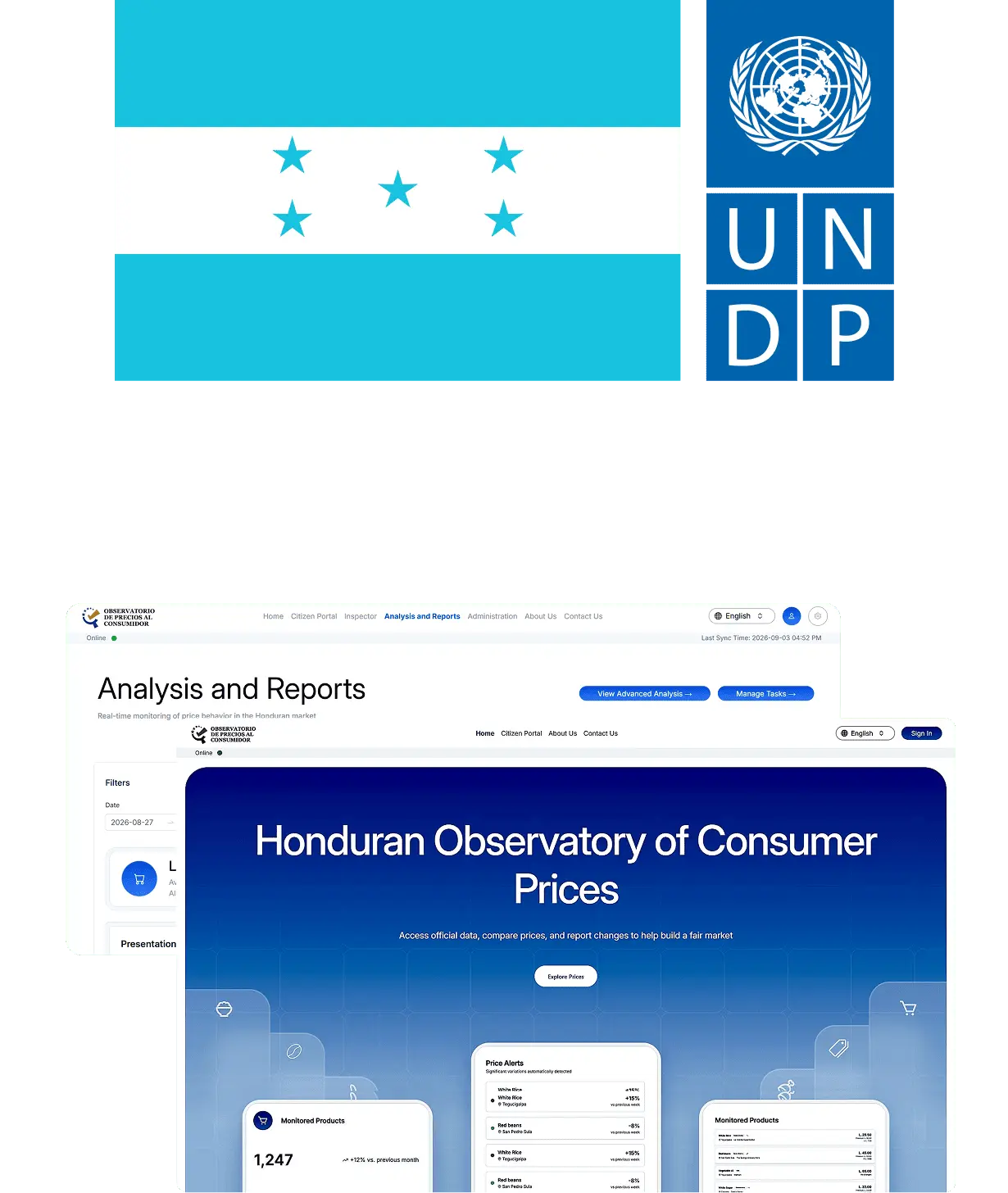
Consumer-price information must be collected across markets, locations, goods and services. Manual or fragmented processes can introduce delays, inconsistent validation and limited visibility, weakening the quality of economic monitoring and official reporting.
Client: Government of Honduras
Government inspectors, analysts and decision-makers required a more structured digital environment for collecting, validating, aggregating and reviewing price information used in Consumer Price Index analysis.
Xeptagon designed and developed the Consumer Price Index platform, including data-collection workflows, validation logic, user roles, analytics, dashboards and reporting functions.
Field and web-based data collection feed into a central analytics and reporting environment. The platform is designed to support consistent data flows from initial collection through validation, calculation and publication.
The system has been delivered for government use in Honduras and forms part of Xeptagon’s wider portfolio of public-sector data and governance platforms. (Xeptagon)
The platform strengthens the reliability, timeliness and auditability of consumer-price information. It provides government analysts and policymakers with a clearer foundation for inflation monitoring, official statistics and evidence-based economic decisions.
One Technical Foundation, Adapted to Each Institutional Context.
Xeptagon's deployments span global platforms, regional programmes and national systems. Each implementation is configured around the relevant policy framework, institutional roles, terminology, languages, data requirements and hosting environment.
Reusable infrastructure developed for UNDP and international ecosystems, including the National Carbon Registry, Digital Transparency System and Hedera Guardian integration.
Multi-country infrastructure such as the CAFI Payment for Environmental Services Platform, supporting shared programme rules with country-level operations.
Country-specific registries, transparency and governance platforms developed around national institutions and regulations in Chile, Sri Lanka, Honduras and other markets.
Our involvement can extend beyond launch through hosting, monitoring, maintenance, security updates, training, documentation and continued adaptation as policies and operational requirements evolve.
Xeptagon has delivered systems for governments, United Nations agencies, multilateral programmes and international technology ecosystems.
Our teams combine climate-market knowledge, public-sector governance, financial-market engineering, data architecture and advanced software development.
We design systems that progress beyond demonstrations into country deployment, stakeholder adoption, operational use and long-term support.
Our platforms are built to connect with national systems, international frameworks, registries, MRV platforms, field tools, markets and reporting environments.
Governments and programme operators retain authority over rules, workflows, data and decisions while using globally proven technical infrastructure.
Xeptagon operates ISO 9001:2015-certified quality-management and ISO/IEC 27001:2022-certified information-security systems, supporting disciplined and secure project delivery.
Speak with our team about a national registry, Article 6 platform, climate-transparency system, environmental-finance programme, blockchain integration or government data platform.
We can demonstrate relevant completed systems, review your institutional requirements and recommend a deployment approach suited to your policy, data and operational environment.